Notes
Images of American Fascism
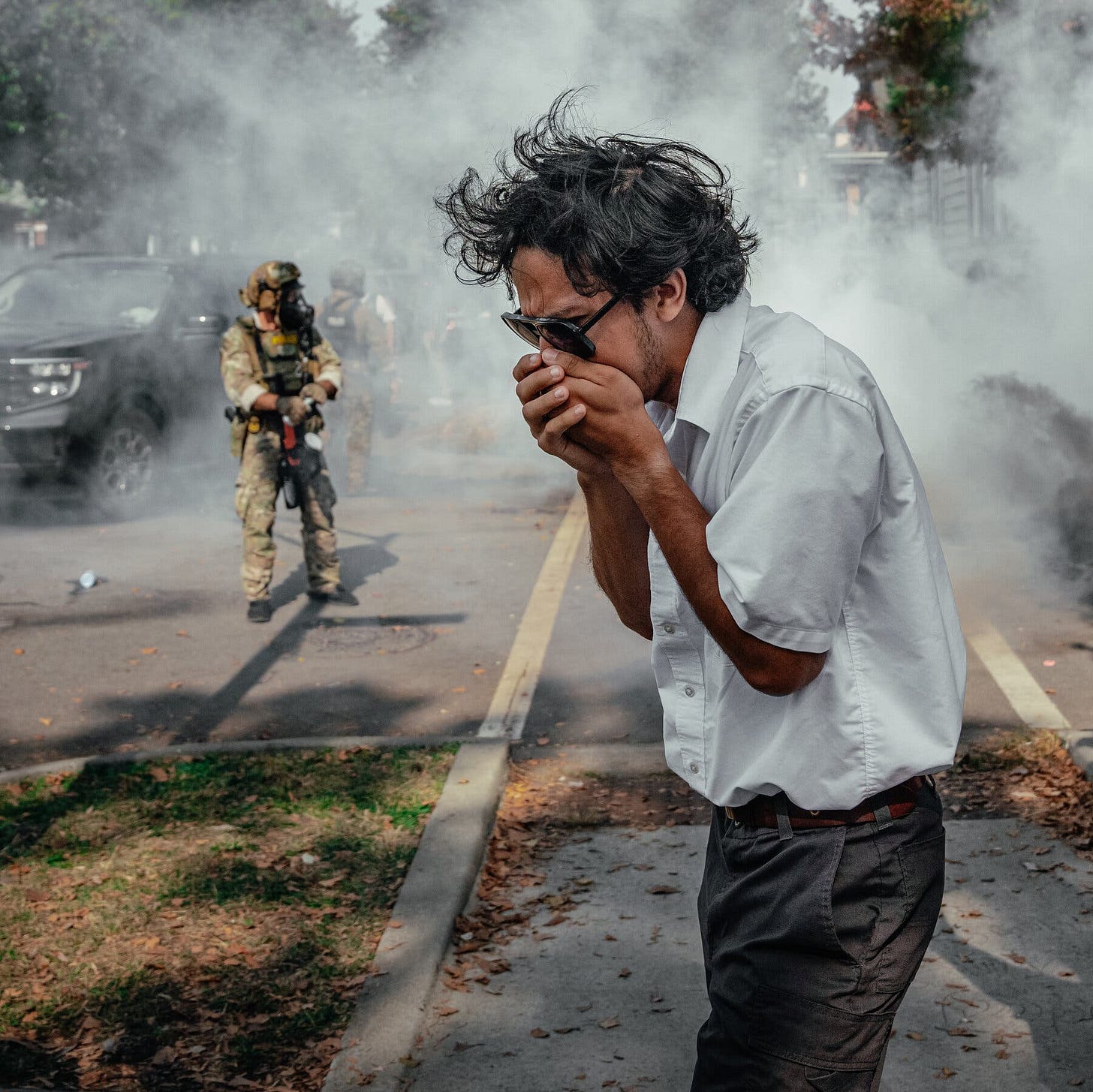
Immigration agents used tear gas in a neighborhood on the southeast side of Chicago in October. Photo: Jamie Kelter Davis for The New York Times
Federal agents as militias. Home Depot parking lots as killing fields. The People’s House demolished. These photos defy sanitized language and show us what American fascism looks like.
By Michael Shaw
The media calls it “immigration enforcement.” They describe “federal presence” in American cities. They report on White House “renovations.” This is the language of normalization—tepid, bureaucratic, designed to obscure what we’re actually witnessing: an occupation of select American cities by extrajudicial militias, domestic terrorism directed from the Oval Office, and the literal demolition of democratic institutions.
The following images refuse that sanitized language. They document what’s actually happening by showing us what it *looks like*—the visual signatures of fascism we’ve seen before in other places, other eras. These photographs activate our historical memory. They force recognition. Home Depot parking lots become killing grounds. A wrecking ball tears apart the People’s House via executive fiat. These images expose the truth that language fails.
Act I: The Occupation
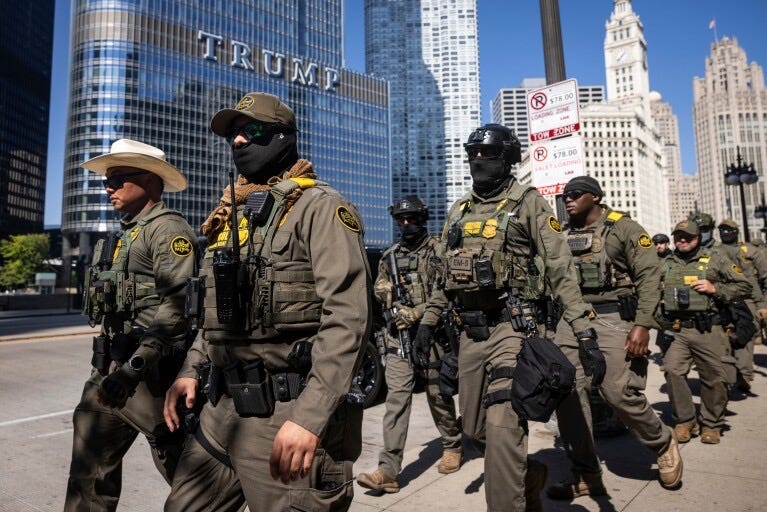
Federal agents from US Immigration and Customs Enforcement and US Customs and Border Protection walk along West Wacker Drive in the Loop, Sunday, September 2825, in Chicago. Photo: Ashlee Rezin/Chicago Sun-Times via AP
Perfect angle.
Photographer Ashlee Rezin lined up the marching federal agents with Chicago’s Trump Tower looming behind them—the gilded monument to one man’s ego now serving as the backdrop for his commandos moving through American streets. The composition makes the connection explicit: these aren’t law enforcement officers serving the public; they’re his forces, deployed to terrorize hand-picked cities into submission.
The agents move with the ragtag quality of a militia—mismatched headgear, irregular formation, but unified in purpose. The street-level perspective puts us in the position of the occupiers, watching them approach. We’ve seen this visual grammar before as paramilitaries barrel through urban corridors.
It’s not the first time Chicago has seen federal forces in its streets. But this time, there’s no convention to disperse. This is occupation as policy.
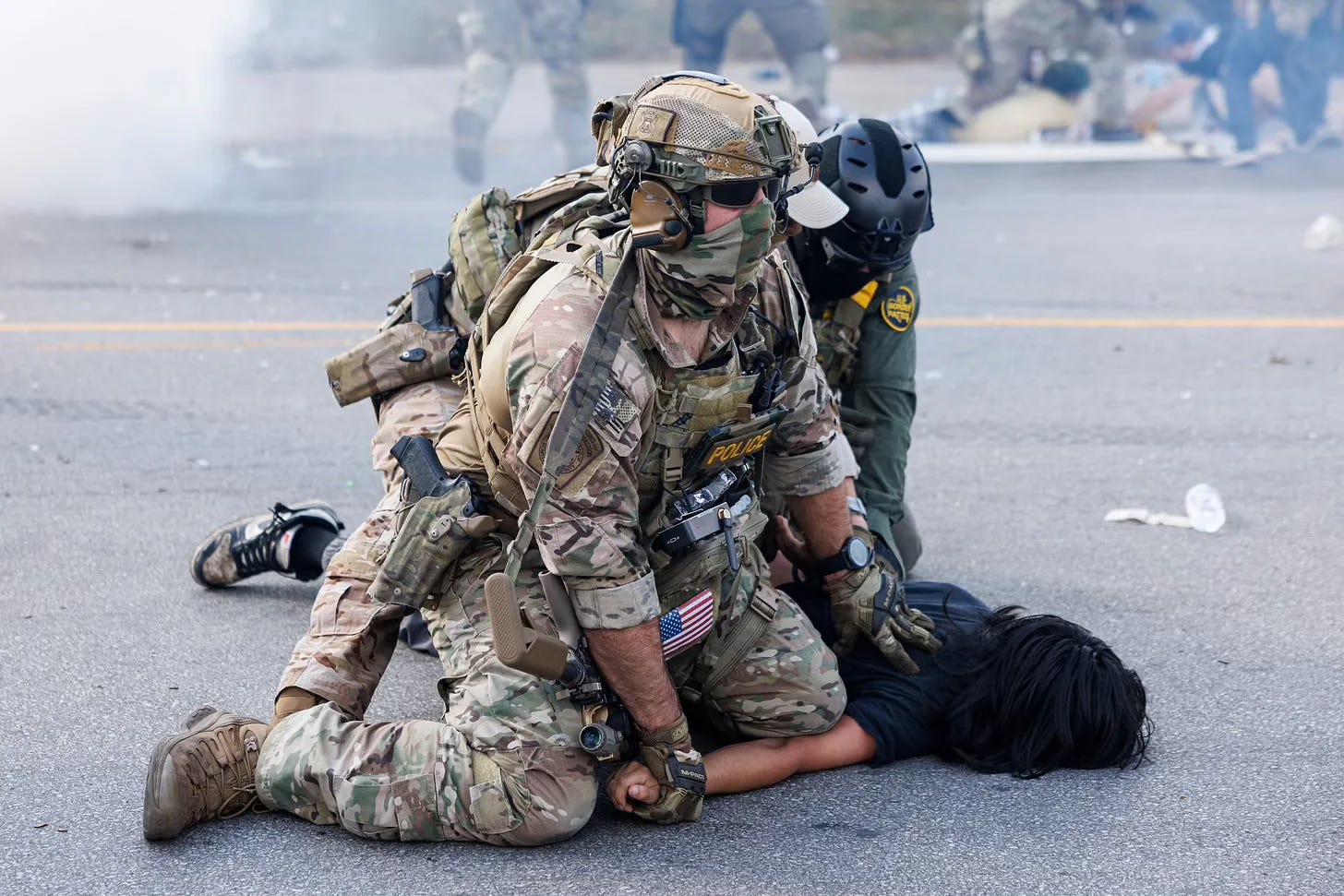
Federal officers hold down a protester in the Brighton Park neighborhood of Chicago after citizens learned that the US Border Patrol shot a citizen in the city’s southwest side. Photo: Anthony Vázquez/Chicago Sun-Times/AP
Body pinned to pavement, uniforms looming over, tear gas hanging in the air—this photo circulated widely because it crystallizes the pattern. Trump deploys force sporadically and unpredictably, which is key to the terror. But this image captures the whole repressive stance in a single frame.
There’s a reason the photo grabbed me the way John Filo’s Kent State massacre photo did. That image stood for everyone who was assaulted and killed during the Vietnam War protests. This one works the same way: every protester pinned an iteration, each waft of spray a token of Tear Gas Nation.
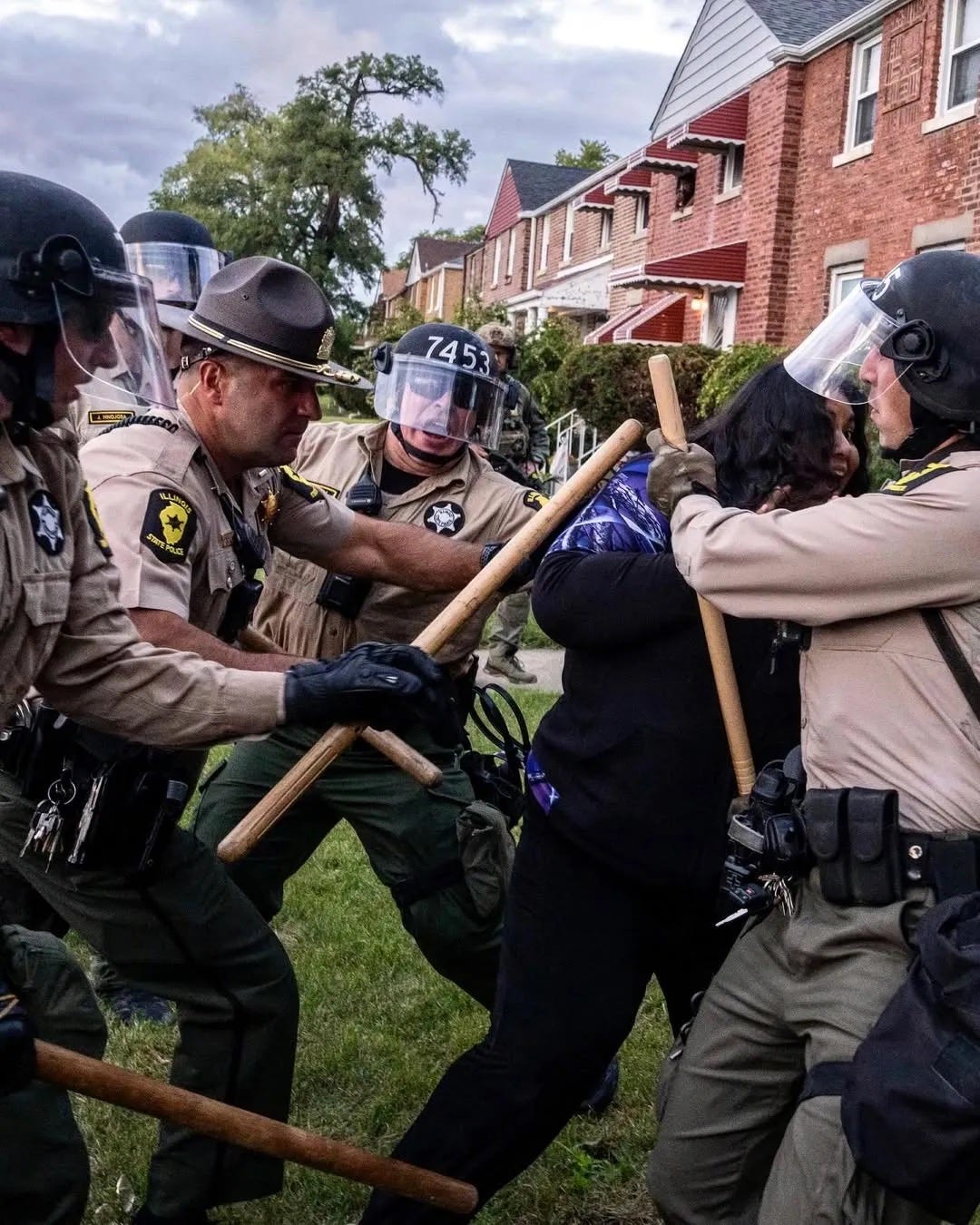
Customs Enchment facility in Broadview, Illinois. State police and county sheriffs enforced a curfew after earlier altercations with federal agents. Photo: Adam Gray/Bloomberg via Getty Images
For decades, the processing center sat tucked in an industrial park in Broadview—most residents didn’t even know it existed until Trump repurposed it as ICE’s “primary processing location” for his enforcement surge. This suburb of 8,000 people now has state police, county sheriffs, and federal agents enforcing curfews, deploying tear gas and rubber bullets—”making war on my community,” as the mayor put it.
The nightsticks form their own architecture—echoing the peaked roofs behind them, creating a window frame of batons that traps the woman protester, screaming off-center. The symbolism is literally torturous: law enforcement tearing apart the very geometry of civil protection, the devil’s triangle swallowing up democratic space.
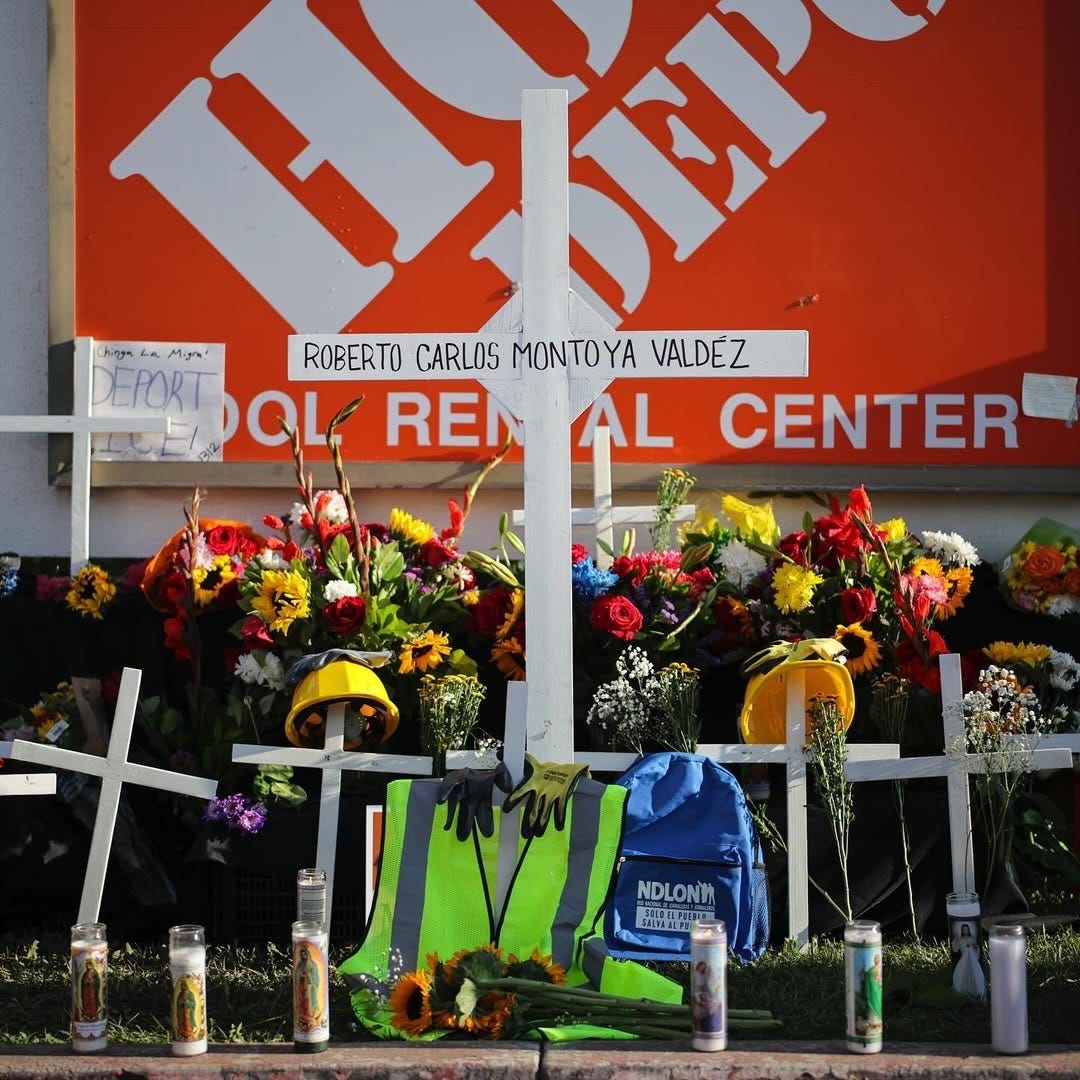
Guatemalan day laborer Roberto Carlos Montoya Valdez died in Monrovia on the 210 Freeway while trying to escape the presence of federal immigration enforcement (ICE) agents during a raid at a Home Depot. His family members in Los Angeles held a funeral service for him before his body was repatriated. Photo: Daniel Cole/Reuters Pictures
Roberto Carlos Montoya Valdez came to a Home Depot parking lot looking for work, just as ICE came hunting. His makeshift memorial marks the spot where he stood that morning—flowers and crosses gathered where day laborers meet at dawn. This is America’s latest war memorial: big-box home improvement stores transformed into killing fields—our Immigrant Arlington.
On the Home Depot asphalt, America’s tacit imported labor collides head-on with Trump’s vicious jingoism. The ubiquitous logo looms over candles and crosses—corporate and indifferent. The brand now equates with their grief. Hard hats and safety vests, meant for building, become icons of loss. The store remains open. The work continues. So we memorialize at raid sites now.
Act II: The Normalization
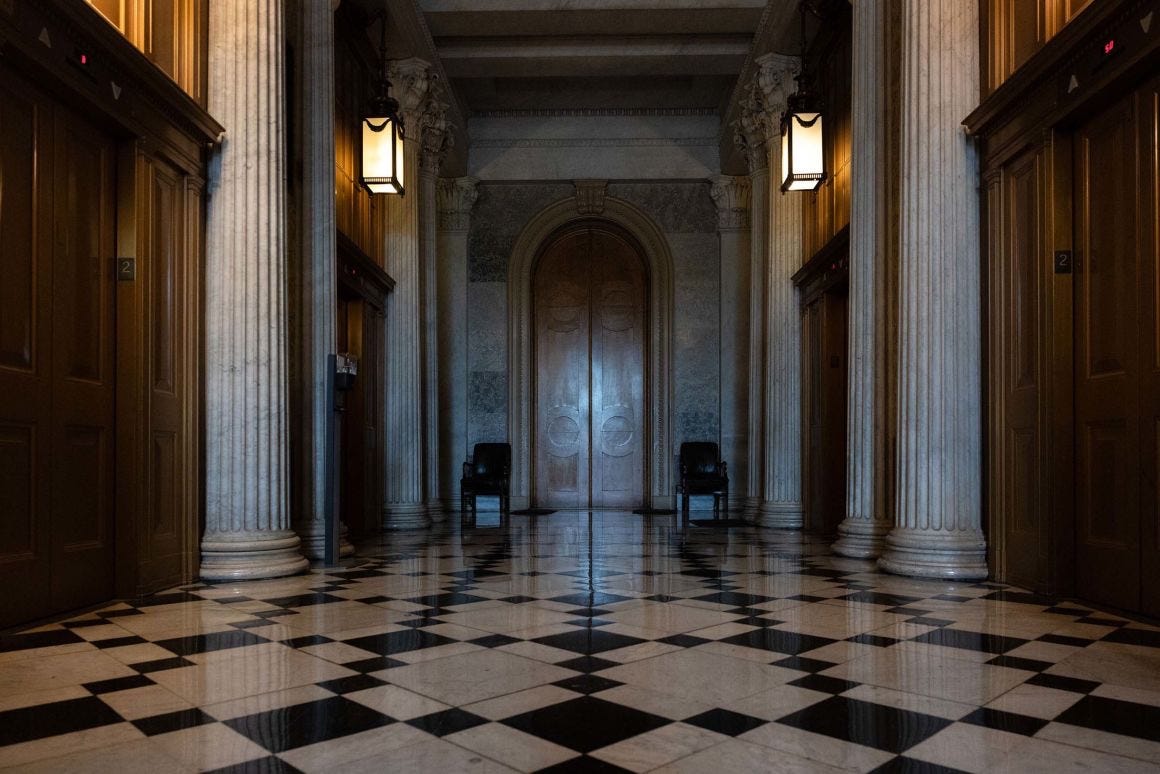
A hallway is empty at the US Capitol in Washington, DC, on Monday, October 13. The federal government shut down on October 1 after failing to reach a funding deal. Photo: Anna Rose Layden/Bloomberg/Getty Images
Capitol photographers live for the frenzy—members rushing to votes, staff zipping down corridors, the constant pulse of governance. This image captures the opposite: abandonment, stillness, democracy made inoperative. The government shut down on October 1 after Trump and congressional allies refused to negotiate a funding deal.
DOGE wasn’t just a meme—it was the blueprint.
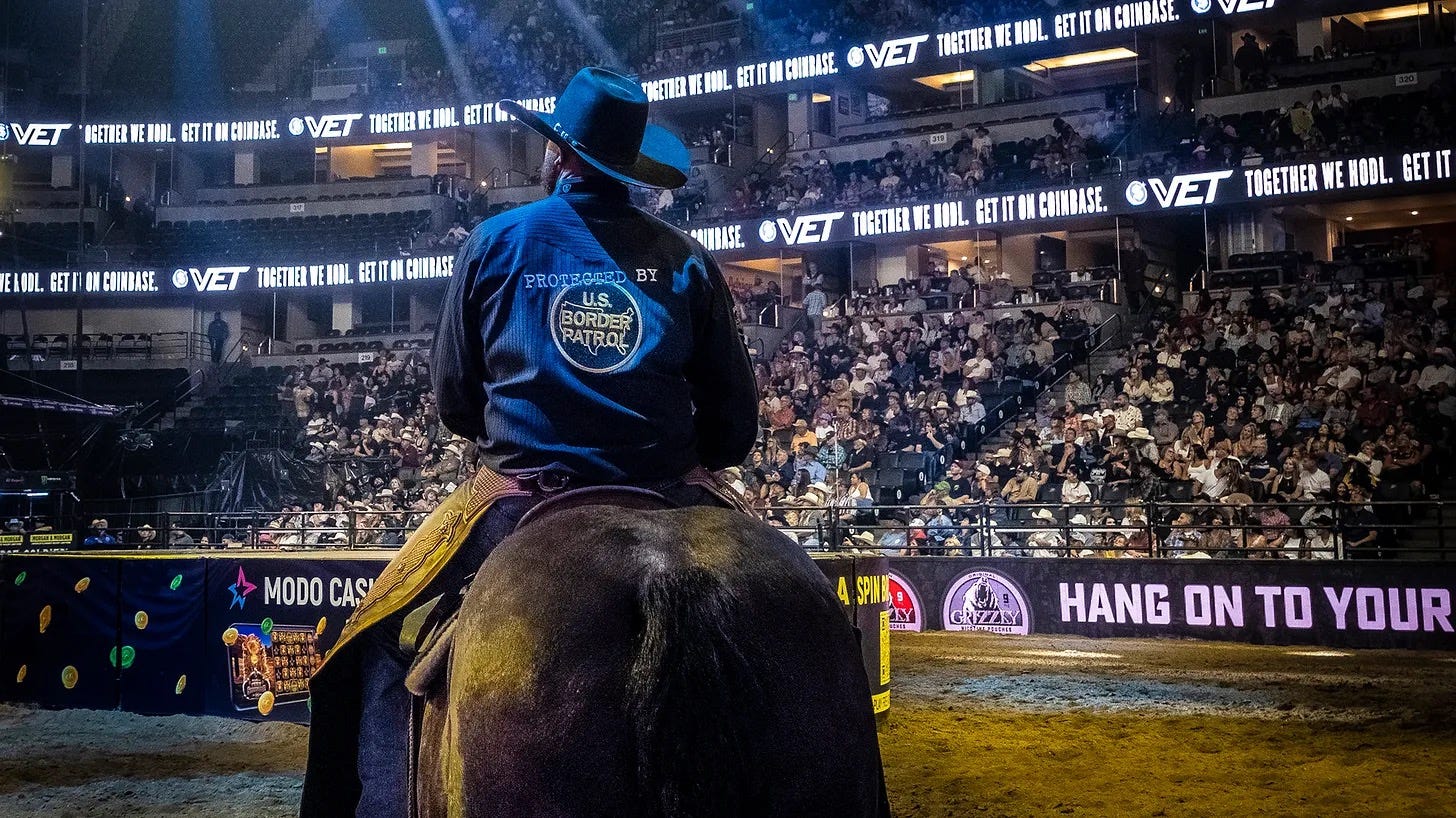
A pickup man on horseback stands by to assist bull riders at a rodeo in Anaheim, California, in September. The Border Patrol is a major sponsor of the Professional Bull Riders league. Photo: Carrie Schreck for Mother Jones
Four years ago, Paul Ratje’s photograph of Border Patrol agents on horseback chasing Haitian migrants through the Rio Grande sparked national outrage. The image was everywhere—agents wielding reins like whips, migrants ducking in terror.
The evolution involves a $15 million sponsorship deal that turns the Border Patrol into an entertainment brand. Pickup men wear Border Patrol chaps. Riders wear “Protected by Border Patrol” jerseys. Agents rappel from arena rafters to standing ovations. Competitors go on “ride-alongs” with agents, participate in apprehending migrants, and post Instagram videos bragging about it. One said chasing immigrants was a greater adrenaline rush than riding a bull.
As immigration enforcement morphs into family entertainment, fascism takes a bow.
Act III: The Demolition
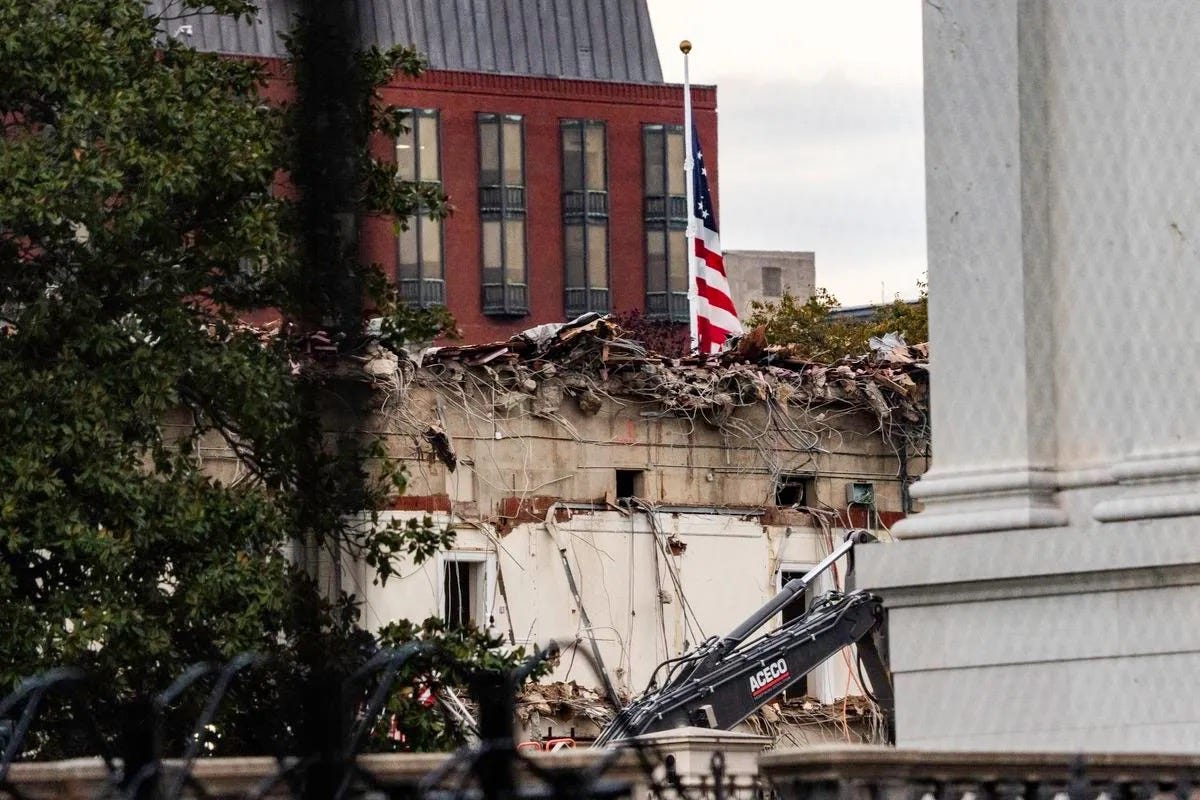
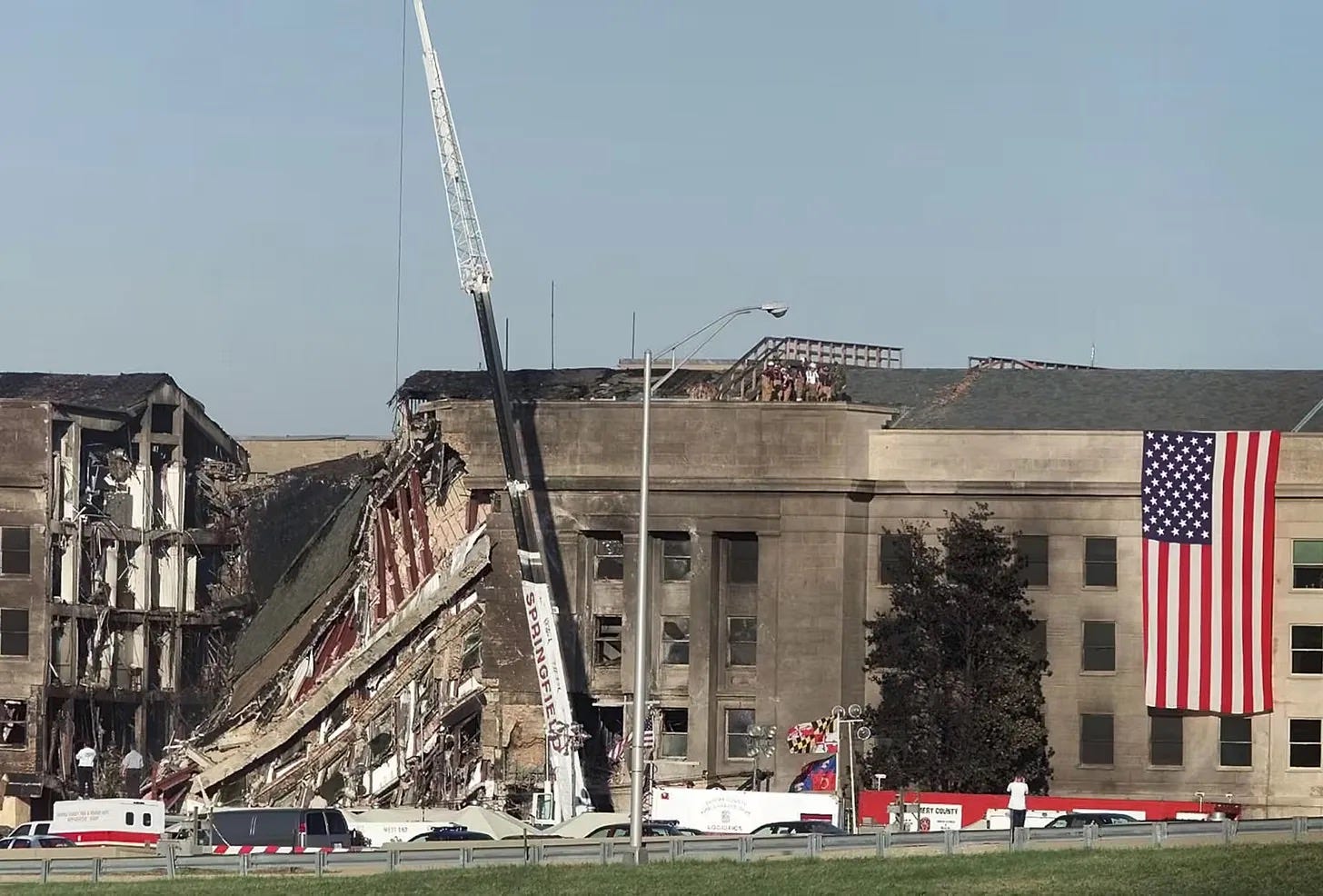
Photo 1: Salwan Georges/The Washington Post. Demolition of a section of the East Wing of the White House, during construction on the new ballroom extension of the White House in Washington, on October 21, 2025. Photo 2: Larry Downing/Reuters. Firefighters and rescue workers undraped a large U.S. flag near the damaged area of the Pentagon on Sept. 12, 2001.
When I saw the gutted facade eclipsing Old Glory in the East Wing demolition photos, 9/11 came to mind. Both images arrest us with their flags and ruptured architecture— the visual similarity only sharpening the difference.
The Pentagon burned from an attack the country had no choice but to endure. Its scar became a national cause—a promise to resist and rebuild. Now, as the White House is gutted by executive order—with no congressional approval, no heed for preservationists, all for a private ballroom—we’re told it’s just “renovation.” Both images reveal iconic American institutions torn apart, each arrayed with flags bearing silent witness. But the Pentagon image memorializes what was done to us; the White House documents what Trump is doing to us. That’s not metaphor—it’s the stark distinction between terrorism and fascism.
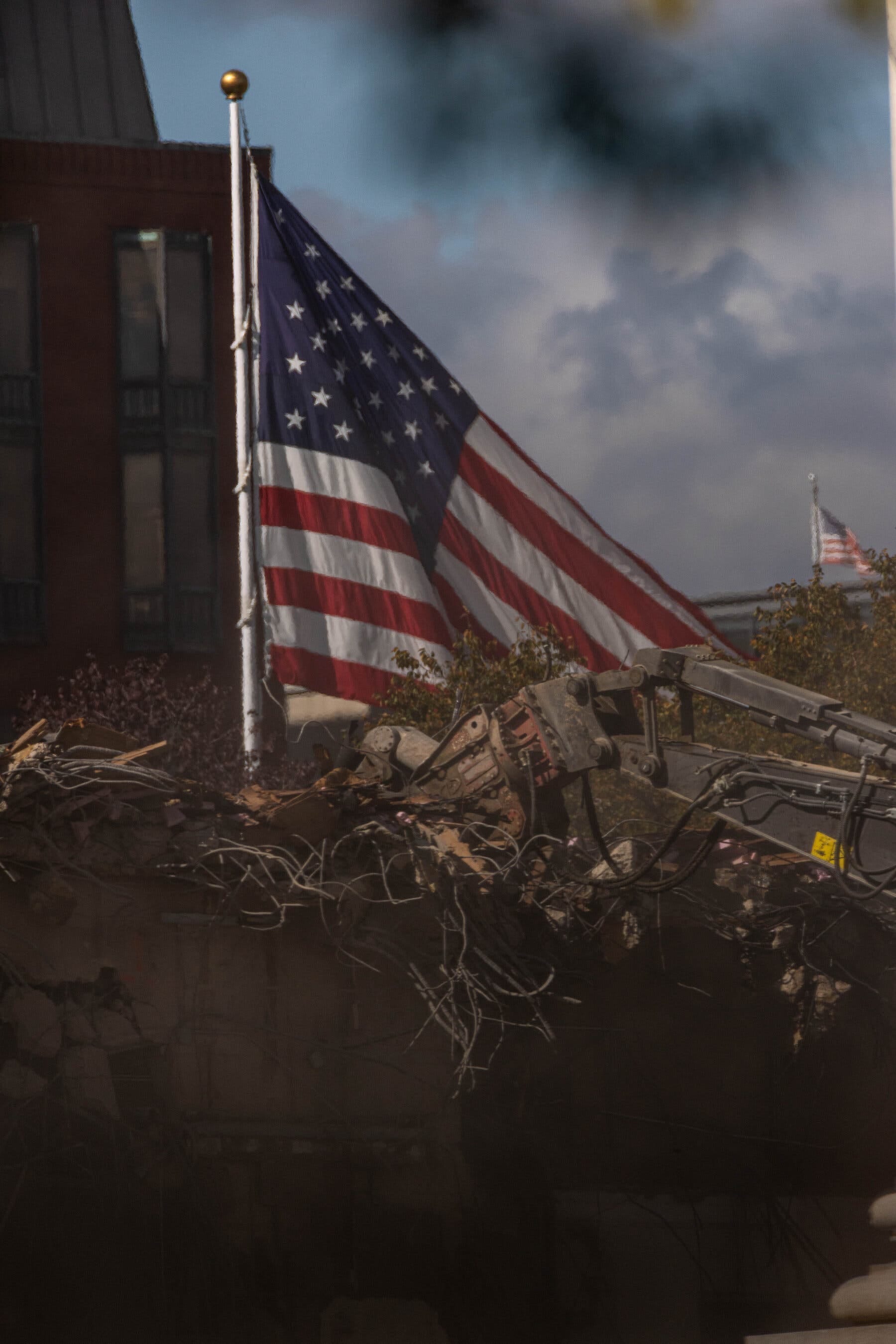
Photo: Alex Kent for The New York Times
Alex Kent’s photograph drives that reality home in more impressionistic terms. The flag hangs close to twisted metal, enlarged but obscured, backgrounded by darkness and debris. Smoke drifts through—from demolition or something more ominous, it’s unclear. There’s a second flag in the distance, smaller, receding through haze. One version of America endures but grows harder to visualize.
The People’s House is a war zone.
Chatting the Pictures: Trump Must Be High
President Trump on the White House roof with a private architect, surveying plans for his $200 million ballroom project. White House photo by Molly Riley. Chatting the Pictures features writer and photo historian Cara Finnegan, RTP Publisher Michael Shaw, and is produced by Liliana Michelena.
Before the wrecking ball came the gloating. Trump on the White House roof in August, private architect at his side, literally standing above the Press Briefing Room where reporters shouted questions from the ground below. Developer inspecting property. Strongman surveying domain. One man literally on top of American democracy.
This is the visual thesis made flesh: not a president governing, but an autocrat claiming ownership. The $200 million ballroom project—90,000 square feet that would replace the entire East Wing—isn’t renovation, it’s annexation. And Trump wants you to see him doing it, wants the photographs of him towering over the institutions, the press, the people. His brand of fascism doesn’t hide; it peacocks.
Watch our full analysis of this image and what it reveals about Trump’s relationship to power, the press, and the People’s House.
Follow us on Instagram (@readingthepictures) and Twitter (@readingthepix), and subscribe to our newsletter.
Topic
A curated collection of pieces related to our most-popular subject matter.

Reactions
Comments Powered by Disqus